
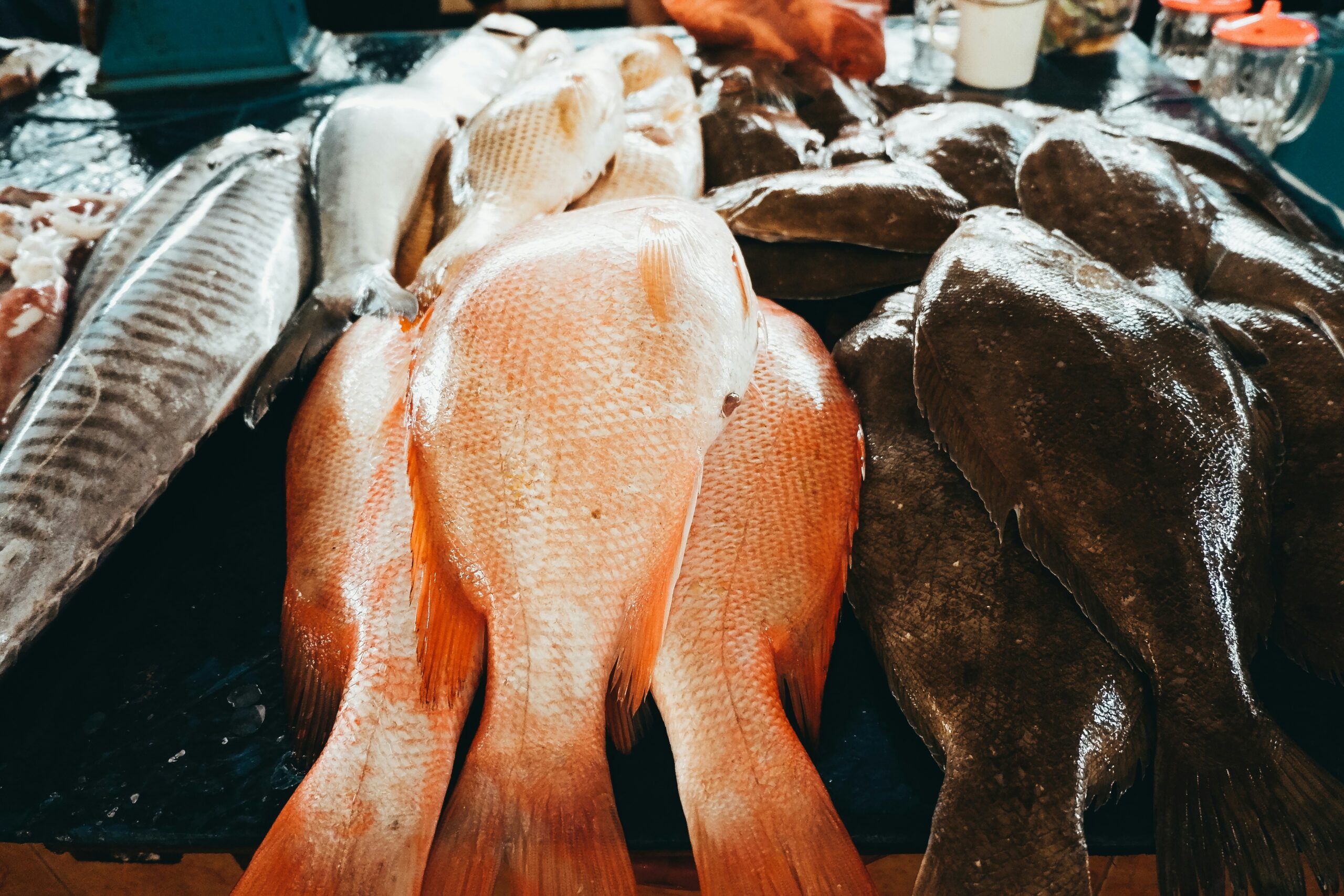
The harbour woke before the sun did. Engines coughed as boats pushed through the fog. Seagulls shrieked in clamorous quarrel, and the smell of diesel and salt mixed with the iron tang of blood already slicking the decks.
The water shimmered dull and metallic under the sodium lights as the waves lapped rhythmically against the walls of the pier. Men in beanies and thick jackets slipped like shadows between the boats, their breath fogging in the cold. A short, cracked laugh echoed briefly before the wind swallowed it. Nets hung from the railings, dripping and heavy, with the scent of old kelp thick in the mist. At the edge of the harbour, the fishermen’s shacks stood hunched in silence, their paint flaking, walls tattooed with salt stains and years of use. A kettle boiled over somewhere, the sharp scent of instant coffee cutting briefly through the air.
He sharpened his knives on a whetstone, the scrape steady, the steel gleaming. Around him, the other men and women were hauling crates into place with practiced strength, setting down wooden boards scarred from years of use and plastic tarps slick with oil and seawater.
When the first boats docked, the sky had turned from a bruised purple to a soft, steely grey. The fishermen heaved their crates down, voices carrying: “Hou vas! Pasop daar!” Muscles straining, boots skidding on wet planks. The crates slammed down onto the concrete walls, silver bodies flopping in their final twitch—snoek, yellowtail, hake. Salt, blood, and the oily sheen of scales animated the scene with motion and smell.
He grabbed a fish, the skin cool and slick against his palm. Knife in, belly split, guts spilling in a warm rush. He worked fast, his hands moving with the precision of habit, casting entrails into a bucket for scraps. The seagulls wheeled closer, screeching. And then, as if on cue, the harbour mascot arrived: a hulking seal heaving onto the slipway, whiskers dripping, eyes dark and slick as wet tar. “Dag, Kaptein,” he muttered. The seal barked, shaking its head.
Beyond the concrete edge, the mountain loomed, cold and indifferent, watching silently. The fishermen of Kalk Bay had worked under its shadow for generations. They found a home here, even before families of colour were pushed from the inner city. Men rose before dawn to chase the fish that fed half of Cape Town. They built their homes on these narrow slopes between sea and stone, where every street led back to the tide. Their sons inherited the salt, their daughters the measured rhythm of waiting: for tides to turn, for men to return.
The old men still told stories of the “Malay fleets” — wooden boats carved by hand, sails patched with flour sacks, their hulls painted in colours bright enough to defy hardship. They remembered when Kalk Bay was a village of the sea, not a postcard for tourists. When every catch was weighed by weathered hands and every prayer was whispered into the wind before pushing out to the deep. The sea took as much as it gave, but they kept coming back.
By mid-morning, the market was in full swing. Tourists drifted along the line of tables, noses wrinkling at the smell. Cameras flashed. One woman, pale-faced, clutched her husband’s arm. “Take a picture, but quickly.” Kaptein lounged on the slipway nearby, lazily watching the crowd, whiskers twitching with interest. He imagined the seal rolling his eyes at the tourists, bargaining for a single yellowtail. They were paying too much, the seal probably thought, but that was their problem.
A local woman approached, basket dangling from her arm, the leather strap swinging with each step. Her eyes flicked over the fish laid out on the wooden board, sharp and calculating. Her voice cut through the salt-tinged air, brisk and practiced. “How much for a snoek?”
“Hundred and twenty rand,” he replied, the words steady, almost bored.
She clicked her tongue against the roof of her mouth, a sharp, rattling sound. “Jirre, julles mos mal! Make it ninety.” Her fingers fumbled with the strap of her basket, tightening it against her shoulder as if steeling herself for the negotiation.
He shook his head, shrugging. “Ek hettie ‘n charity nie, mevrou. Hundred and ten.” His hand rested on the knife beside him, glinting faintly in the light, ready but relaxed.
Her eyes narrowed, a flash of challenge passing across her face. With a small sigh and a quick nod, she dropped the crisp notes into his palm, edges cool and stiff against his fingers. She chose a fish, and he wrapped it carefully in paper, tucking it into a plastic bag for her. He smiled faintly, watching her walk off, basket swinging with confidence. Straightforward, no fuss; he liked that about her. The market’s chatter rose around him again, but for a moment, the world had shrunk to the thud of knives, the weight of the snoek, and the brisk certainty of a woman who knew what she wanted.
The smell of frying onions wafted from the restaurants on the harbour, mingling with the heavy stink of fish guts. Workers in stained aprons passed by, greeting him with nods. “Shot, ou.” They would be cooking the very fish he guts, selling it back to tourists at triple the price. He shook his head, smiling wryly.
The sun sat high by noon, hot against the corrugated roof of the shed, breathing fire on the back of his neck. His shirt clung damp with sweat, his forearms glittering with fish scales like silver dust. He wiped his forehead with the back of his hand, smearing salt and blood into the creases of his skin. A boy hovered nearby, maybe ten, eyes wide and gleaming with curiosity.
The boy shifted closer. “Uncle Fiekie, can I hold the knife?”
He chuckled softly. “No, no. You’ll cut yourself.” He handed the boy a scrap instead. The kid beamed, tossing it to the seal, which snapped it up with a wet smack. Tourists gasped and squealed, phones flashing like bait in the sun. He tossed the beast another fish head. It vanished in a blur of whiskers and teeth.
The old white lady arrived just after lunch, like clockwork — wide-brimmed hat, wicker basket, vowels clipped and English-sharp. “Good afternoon. Two snoek, please. Fresh ones.”
He nodded, choosing carefully, laying them out. She inspected them with surgical precision, then gave a small, tight smile — polite, perfunctory. “Perfect. Thank you.”
Coins clattered onto the board, followed by a few folded notes that fluttered in the breeze. He watched her leave, posture upright, as if the smell couldn’t touch her. He shrugged. She had been coming for years, and she would keep coming until the sea stopped giving — or took her back, as it does with all who belong to it.
By late afternoon, the market had slowed. The boats were mostly empty, and the tourists were thinning. The rival vendor two tables down called out—louder than everyone else—hawking the last of his stock. They traded insults, half-serious, half-performance. The harbour official ambled past, clipboard in hand, pretending to check permits. Nobody paid him much attention.
As the light shifted, it turned the water molten. He gutted the last fish of the day, knife sliding clean, the rhythm almost soothing. The gulls still wheeled, their cries sharp against the quieting harbour. The seal was gone, belly full, having slipped back into the sea. Stray cats stalked beneath the tables, tails twitching, scavenging for the last scraps.
Rafiek rinsed his board, the cold water biting at his raw hands. Salt and fish clung to his skin no matter how hard he scrubbed The day’s work was packed away into neat parcels of flesh, ice, and paper.
When he finally sat down, the harbour was soft with evening. Boats rocked gently, and the smell of the sea deepened. His hands ached, stiff and stained, but steady. He lifted them to his face and inhaled: salt, scales, steel, blood. The smell of a life—ordinary and endless.