
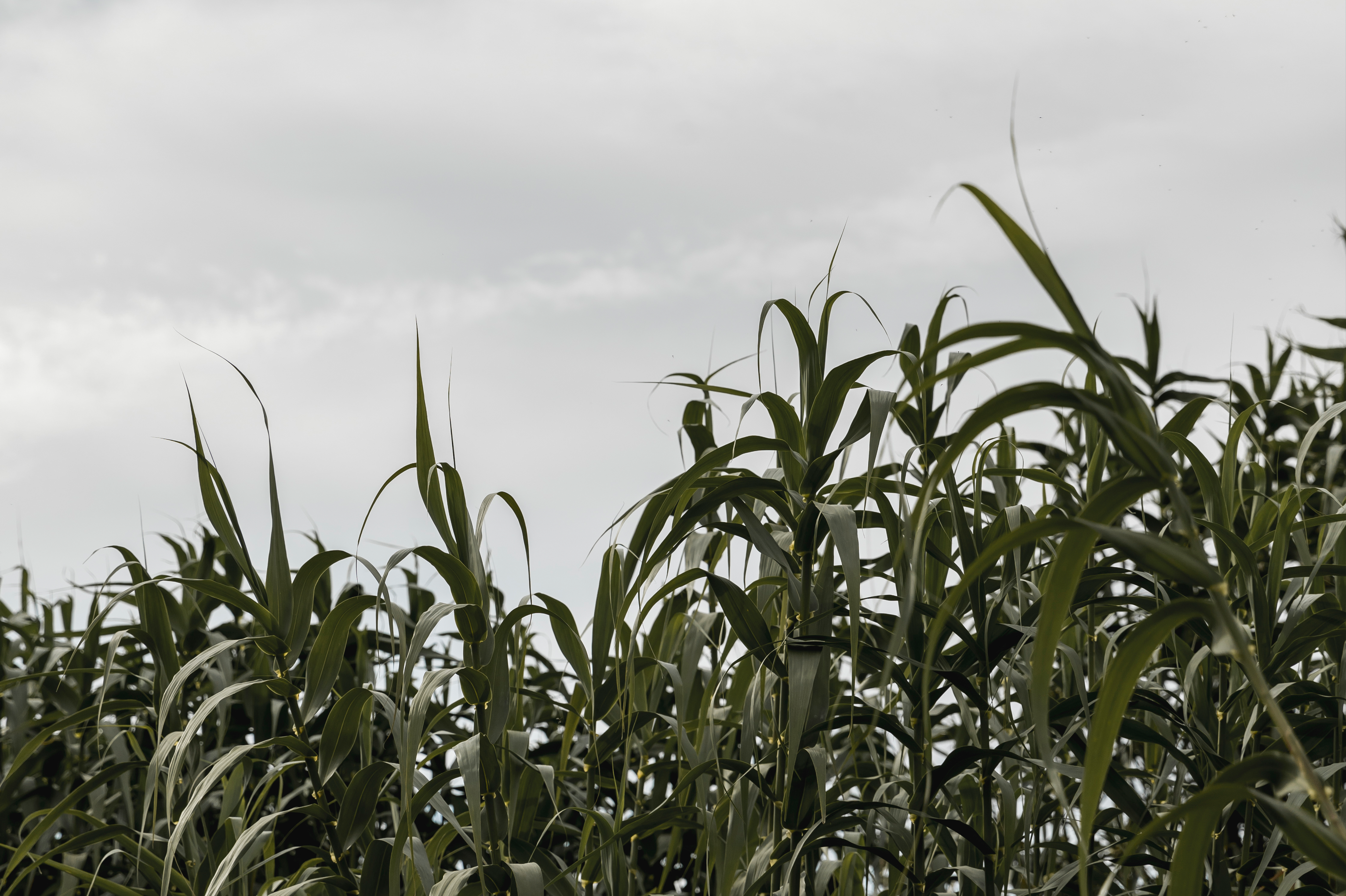
Happiness made his way home from school, eager to show his mother the drawing he had made of the two of them. Barefoot in stained white shorts and a faded navy t-shirt, he balanced his bag on his head, just the way his mother always did when carrying laundry back from the garden. His little legs hurried along, cutting left through the mielie fields, dodging jagged stones and ducking beneath the heavy leaves that brushed against his shoulders, all to reach home a little faster.
As he hurried through a narrow path, worn smooth by countless footsteps before his own, the clouds thickened and darkened. A crack of thunder split through the sky above. And then, the rain came —sudden and merciless— with drops slicing through the air, striking his head and pummelling the parched earth below. The ground seemed to breathe, releasing a living scent: the sweetness of wet soil mingled with the sour tang of rotting plants and the heavy silence of scattered birds that no longer sang.
As he ran, Happiness imagined his mother’s smile, the way her eyes crinkled like folded paper lanterns whenever laughter took her by surprise. He pictured her hanging the damp clothes with tired hands, and he promised himself that today, he would give her something no rain could wash away. He clutched his drawing tightly under his shirt to shield it from the rain, so his mother to see it before the paper got smudged. The mielie stalks towered over him, their leaves bending low under the sudden downpour, brushing against his thin arms and over his head.
The downpour grew heavier — no longer gentle drops, but sharp spears stabbing the soil, like a thousand cold fingers drumming against his skin. The mud clutched at his ankles, each step heavier than the last. The wind hissed through the stalks like a warning, bending the mielies as if the field itself had turned against him. The rain was cruel, as if it knew the treasure he carried and longed to ruin it. The more it pressed, the more stubbornly he held his drawing close, as if defiance alone could keep it safe. To the sky, his struggle meant nothing. Yet to him, every drop was an enemy threatening to erase his gift.
The paper was thin, flimsy, never meant to withstand a storm. Yet to Happiness it was stronger than the rain, even stronger than the hunger that was knotting in his stomach. And you may ask, ‘why did he not simply tuck the drawing safely into his bag?’ Because Happiness was so proud of it that he wanted to keep it close—pressed against his chest—where he could always see it and feel it, so that no one and nothing, not even the storm, could take it from him.
When he finally reached the edge of the field, he could see their house, a patched-together shack of tin and wood that glistened silver under the rain-washed light. In his eyes, their patched-together home was fragile, but it glowed with warmth all the same. Smoke rose lazily from the small fire pit where his mother usually cooked. His chest swelled with pride. Today, he thought, she would smile because of him — not just because he had made it home safely, or because the washing was saved from the watering, but because of something he had created with his own hands.
He burst through the doorway, drenched and panting, his little toes muddy. His mother looked up from a basked of dry clothes, startled, then softened as she saw his precious face. Happiness took out the paper from under his t-shirt and opened it carefully, his eyes shining brighter than the sky.
“Look, Mama,” he said, his voice trembling with both excitement and shyness.
On the slightly damp and wrinkled piece of paper was his drawing: a crooked little house with two stick figures inside. One was tall, wrapped in a scarf; the other short, with a smile that stretched from ear to ear. Above them, in uneven letters, he had written: ‘Me and Mama are happy.’
For a moment, silence hung in the room, broken only by the rain beating against the roof. Then his mother gathered him into her arms, both of them now wet, the drawing pressed between their hearts.
“It’s beautiful, my boy,” she whispered. “Just like you.”
And though the storm outside raged, inside the small home there was warmth, laughter, and the quiet certainty that even in difficulty, love could still be drawn, held, and shared.